What Does Your Birthmark Mean? Types, Shapes, Locations & Colors
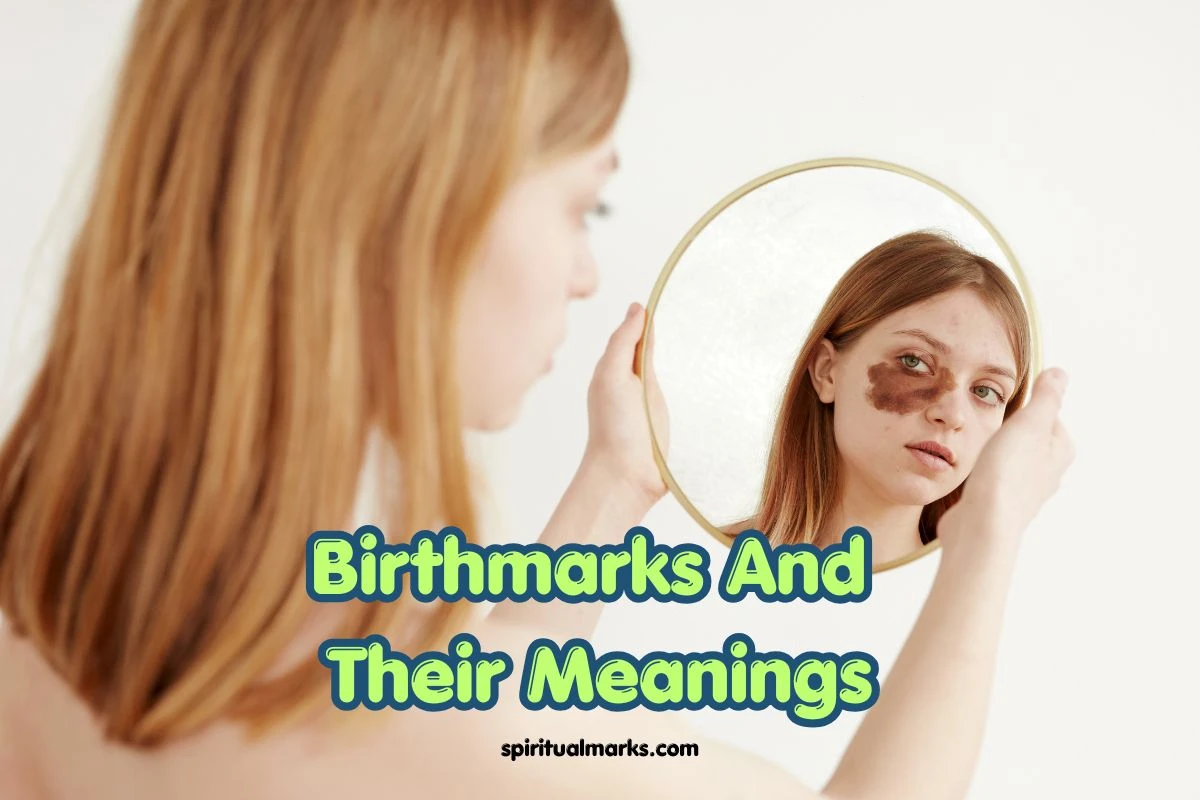
Many of us have paused in front of a mirror at some point, tracing a birthmark with quiet curiosity. Why is it there? Does it carry a deeper meaning, or is it simply a random mark written into our skin at birth?
Across cultures and centuries, birthmarks have rarely been seen as accidental. They have been read as signs, symbols, and even messages about identity, destiny, and spiritual history.
If you have ever wondered whether your birthmark says something about who you are or what your life path might hold, you are not alone. This article brings together traditional beliefs, cultural interpretations, and symbolic systems to help you understand what your birthmark may represent.
While modern science explains how birthmarks form, ancient traditions attempt to answer why they appear in specific places, shapes, and colors.
Let us step into that layered world where body marks meet meaning. If you enjoyed this, you’ll love Ankle Twitching Spiritual Meaning.
Key Takeaways
- Birthmarks are commonly understood as natural skin variations, yet many cultural systems assign symbolic meanings to their placement, shape, and color.
- Ancient traditions such as Samudrika Shastra and Chinese face reading link birthmarks to personality traits, karmic patterns, and life events.
- The meaning of a birthmark often depends on multiple factors working together, including location, shape, size, and color.
- Spiritual interpretations of birthmarks frequently connect them to past lives, emotional imprints, or energetic imbalances.
What Are Birthmarks?
Birthmarks are visible marks on the skin that are either present at birth or appear shortly afterward. Medically, they fall into two broad categories: vascular birthmarks, which are caused by abnormal blood vessels, and pigmented birthmarks, which result from clusters of pigment-producing cells.
From a scientific perspective, birthmarks are harmless variations in skin development. However, human curiosity rarely stops at biology. Across civilizations, these marks have been interpreted as signs of individuality, spiritual imprints, or even cosmic influences.
This dual perspective is important. On one hand, birthmarks are natural and common. On the other, they have been deeply woven into symbolic systems that attempt to explain human personality, fate, and identity.
Significance of Birthmark According to Astrology
Samudrika Shastra
Samudrika Shastra, an ancient Indian system, studies body features to interpret character and destiny. Within this framework, birthmarks are considered powerful indicators of karmic imprints. The placement of a mark can suggest tendencies such as wealth, emotional sensitivity, leadership, or spiritual inclination.
For example, marks on the forehead are often associated with intelligence and destiny, while marks on the chest may relate to emotional depth and relationships.
Chinese Astrology and Face Reading
Chinese facial reading, also known as Mian Xiang, views the face and body as maps of life energy. Birthmarks are interpreted as signs of fortune, obstacles, or hidden talents. Each part of the body corresponds to a life aspect such as career, relationships, or health.
A mark near the eye might be linked to emotional experiences, while one on the nose may reflect financial patterns or personal ambition.
Western Astrology
Western traditions tend to be less systematic but still attach meaning to physical traits. Some interpretations connect birthmarks to planetary influences or past-life memories. In this view, a birthmark may symbolize a lesson carried forward or a significant emotional event from another lifetime.
Together, these systems show that birthmarks are often read as more than physical features. They are seen as markers of deeper narratives.
Different Types of Birthmarks and Their Meanings
These meanings are drawn from Samudrika Shastra, Chinese face reading, and a blend of Eastern and Western astrological interpretations. They should be viewed as symbolic frameworks rather than absolute truths.
Types of Birthmark on the Basis of Shape and Their Meanings
When you first notice the shape of a birthmark, it often feels like more than coincidence. Many traditions across cultures have treated these shapes as symbolic patterns rather than random formations. In systems like Samudrika Shastra and other symbolic interpretations, shape is believed to reflect underlying personality traits, emotional tendencies, or even life themes that unfold over time.
Heart-Shaped Birthmarks
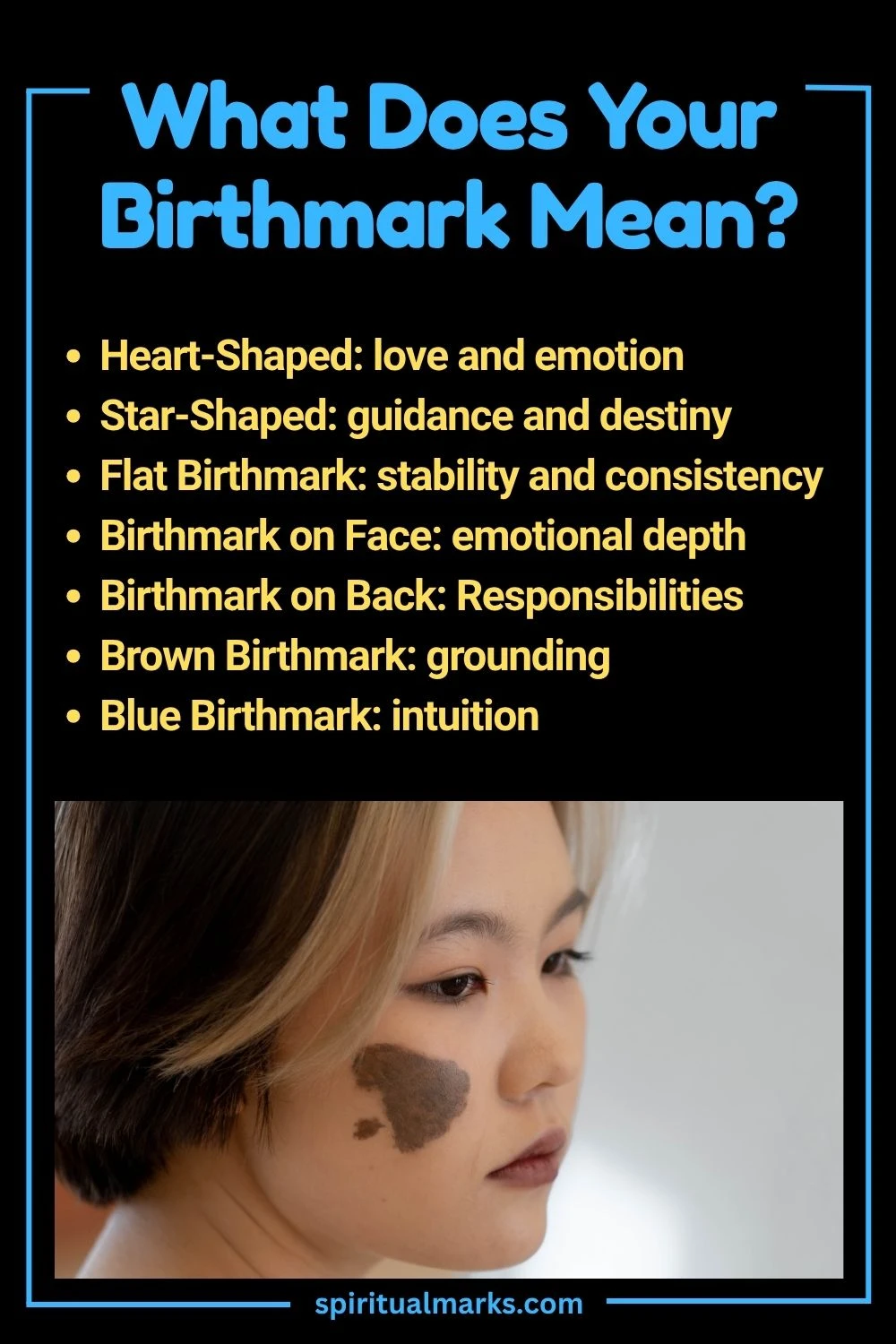
A heart-shaped birthmark tends to draw immediate attention because of its universal association with love and emotional connection. In symbolic traditions, this shape is often linked to individuals who experience life through a deeply emotional lens. These are people who feel strongly, love intensely, and often place relationships at the center of their lives.
There is also a belief that such individuals carry a natural capacity for empathy. They may find themselves easily understanding others’ emotions without needing much explanation. This can make them compassionate partners, loyal friends, and attentive caregivers. However, the same openness can also make them vulnerable to emotional overwhelm or disappointment.
In a broader sense, the heart shape is not limited to romantic love. It can reflect a person who values human connection in all forms, whether through family bonds, friendships, or community involvement. Some interpretations also suggest that these individuals may go through important emotional lessons in life, learning how to balance giving with receiving.
Star-Shaped Birthmarks
A star-shaped birthmark often carries a sense of rarity and distinction. Across many cultural interpretations, stars symbolize guidance, destiny, and something that stands apart from the ordinary. People with this type of marking are sometimes viewed as having a unique path or purpose.
There is a recurring idea that these individuals may not always follow conventional routes in life. They may feel different from others early on, whether in their thinking, interests, or life choices. This difference is not seen as a disadvantage. Instead, it is often interpreted as a sign of originality and creative potential.
In spiritual traditions, star shapes are sometimes connected to intuition or inner guidance. It is believed that such individuals may have a heightened awareness of subtle energies or a strong inner voice that guides their decisions. Their life journey may involve moments where they step into roles that influence or inspire others, even if that was not their initial intention.
Diamond-Shaped Birthmarks
The diamond shape has long been associated with strength, durability, and value. When applied to birthmarks, this symbolism often translates into resilience and the ability to withstand pressure. People with diamond-shaped marks are frequently interpreted as individuals who can navigate challenges with determination.
These individuals may face demanding situations throughout life, but the symbolism suggests that they have the inner resources to emerge stronger. There is often a connection to ambition as well. In some interpretations, the diamond shape points to a person who seeks stability, success, and material security.
At a deeper level, the diamond is formed under intense pressure over time. This metaphor is often used to describe a life path where growth comes through experience rather than ease. It reflects a journey shaped by persistence, discipline, and the gradual development of inner strength.
Cross-Shaped Birthmarks
Cross-shaped birthmarks carry layered and sometimes contrasting meanings. In many traditions, the cross is a symbol of intersection, where different forces meet. This can represent challenges, transformation, or important life crossroads.
Some interpretations suggest that individuals with this shape may encounter significant trials or responsibilities. These experiences are not viewed purely as negative. Instead, they are seen as opportunities for growth, maturity, and deeper understanding. The idea of karmic influence is often mentioned in this context, where life lessons are believed to carry forward from past actions or experiences.
At the same time, the cross can also symbolize balance. It represents the meeting point of physical and spiritual dimensions, suggesting that these individuals may spend their lives navigating between practical realities and deeper philosophical or spiritual questions.
Flat Birthmarks
Flat birthmarks are often interpreted as symbols of stability and consistency. Their even appearance reflects a steady and grounded form of energy. In symbolic readings, this is associated with individuals who prefer balance, predictability, and a structured approach to life.
Such individuals may not seek constant change or dramatic shifts. Instead, they often value routine and reliability. They tend to approach challenges calmly and are less likely to react impulsively. This steady nature can make them dependable in both personal and professional settings.
From a broader perspective, flat birthmarks are sometimes seen as indicators of a life path that unfolds gradually. Progress may come through patience and persistence rather than sudden breakthroughs. This does not reduce the significance of their journey. It highlights a different kind of strength rooted in consistency.
Raised Birthmarks
Raised birthmarks introduce a sense of intensity, both visually and symbolically. In many interpretations, this physical prominence is linked to heightened emotional or experiential depth. Individuals with raised marks are often believed to feel and experience life more intensely than others.
This intensity can manifest in various ways. It may appear as strong passions, deep attachments, or a powerful drive toward certain goals. These individuals might also go through significant highs and lows, as their experiences tend to be more vivid and impactful.
In symbolic terms, a raised birthmark can indicate areas of life that carry particular importance or focus. It suggests that certain themes, whether related to relationships, ambition, or personal growth, may play a more pronounced role in shaping their life story.
Birthmark Placement and Its Symbolic Meaning
While shape offers one layer of interpretation, placement adds another dimension entirely. Across traditional systems, the location of a birthmark is often believed to correspond with specific aspects of life, personality, or destiny. These interpretations vary, but they consistently reflect the idea that different parts of the body symbolize different life domains.
Top of the Head
A birthmark on the top of the head is often associated with higher awareness and leadership potential. This area is symbolically linked to thinking, consciousness, and connection to broader perspectives.
Individuals with markings in this region are sometimes believed to possess strong mental clarity or an inclination toward philosophical or spiritual thinking. There is also a recurring association with authority, suggesting that such individuals may naturally take on leadership roles or positions of influence.
This placement can also reflect a tendency to think beyond immediate circumstances, focusing instead on long-term vision or deeper meaning.
Face
The face is one of the most expressive and socially visible parts of the body, so birthmarks here often carry more specific interpretations depending on their exact location.
A mark on the forehead is frequently linked to intellect, foresight, and destiny. It may suggest a person who is thoughtful, analytical, or guided by a strong sense of purpose.
Cheek marks are often connected to social energy and emotional expression. These individuals may be outgoing, expressive, and responsive to social environments, though interpretations can vary depending on the exact position.
A birthmark on the chin is commonly associated with determination and persistence. It may point to someone who stays committed to their goals and continues pushing forward despite obstacles.
Eyes, Eyebrows, Nose, and Lips
Marks near the eyes or eyebrows are often tied to perception and emotional depth. These individuals may have strong intuitive abilities or a heightened sensitivity to the emotions of others.
The nose is frequently associated with ambition and material concerns. A birthmark in this area may indicate a focus on career, success, or financial stability, though interpretations differ across traditions.
Lips are closely connected to communication and relationships. A mark here can symbolize expressive abilities, persuasive communication, or a strong connection to interpersonal dynamics.
Ears and Jawline
A birthmark on the ear is often linked to wisdom and the ability to listen. This placement suggests receptiveness, not only in communication but also in learning from experiences.
The jawline represents structure and decision-making. Marks in this area are commonly interpreted as signs of willpower, resilience, and the ability to make firm choices. These individuals may approach life with a strong sense of direction.
Neck
The neck serves as a bridge between the mind and the body, and its symbolic meanings often reflect this connection. Birthmarks here are sometimes associated with communication challenges or expressive abilities.
Some interpretations suggest that individuals with marks on the neck may need to work on expressing their thoughts clearly or balancing what they think with what they say. Others view it as a sign of strong communication potential that develops over time.
Back
A birthmark on the back is often linked to responsibilities and burdens. This does not necessarily imply hardship alone. It can also represent strength and the ability to carry significant responsibilities.
In symbolic terms, the back represents what we carry through life, whether emotional, physical, or psychological. Individuals with marks here may take on roles that involve supporting others or managing complex situations.
Hands
Hands are associated with action, creativity, and interaction with the world. Birthmarks in this area often indicate an active and engaged personality.
These individuals may be inclined toward creative pursuits, practical work, or roles that require skill and precision. There is also an association with independence, suggesting a person who prefers to take initiative rather than wait for direction.
Legs
The legs symbolize movement, direction, and independence. Birthmarks here are often interpreted as signs of a life defined by progress and change.
Individuals with marks on the legs may have a strong desire for freedom or exploration. Their life path may involve travel, transitions, or shifts in direction that shape their personal growth.
Belly and Chest
The belly and chest are closely connected to emotions and personal security. Birthmarks in these areas are often interpreted as reflections of inner emotional life.
A mark on the chest may symbolize openness, vulnerability, or strong emotional connections, while the belly is more closely tied to instincts and personal comfort. These placements often point to individuals who are deeply aware of their emotional needs and responses.
Private Areas
Birthmarks in private areas, like buttock marks, are interpreted in more symbolic and often more complex ways. In some traditions, they are associated with deeply personal or karmic aspects of life.
These interpretations often focus on themes related to intimacy, identity, and personal transformation. The idea is that such markings may reflect experiences or lessons that are deeply internal and not always visible to others.
The Spiritual Meaning Behind Birthmark Colors
When you first notice a birthmark, the color often stands out before anything else. It draws your attention, invites curiosity, and sometimes even shapes the story you tell yourself about it. Across cultures and belief systems, color has always carried symbolic weight.
We associate red with intensity, blue with calm, white with purity. It is only natural that these associations extend to something as personal and permanent as a birthmark.
At the same time, it helps to remember that these meanings are symbolic rather than scientific. They reflect human attempts to connect the visible body with invisible ideas such as energy, memory, and identity. With that in mind, each color can be seen as a lens rather than a fixed truth.
Brown Birthmarks: grounding and physical connection
Brown birthmarks are among the most common, and their interpretation often feels rooted in stability. In many symbolic systems, brown is linked to earth energy. It represents solidity, reliability, and a strong connection to the physical world.
If you relate to this interpretation, a brown birthmark may be seen as a reflection of practical strength. It can symbolize a person who is grounded in reality, someone who values structure, consistency, and tangible results. In spiritual narratives, this kind of marking is sometimes associated with individuals who are deeply connected to their environment and responsibilities.
There is also another layer worth considering. Brown can suggest endurance. Just as the earth supports life through cycles of change, this color may reflect resilience through life’s challenges. Some traditions interpret it as a sign of a soul that has developed strength through repeated experiences, whether in this life or in symbolic past lives.
Gray Birthmarks: neutrality and hidden potential
Gray birthmarks often carry a quieter, more ambiguous symbolism. Unlike more vivid colors, gray sits between extremes. It is neither dark nor light, neither warm nor cool. Because of this, it is often interpreted as a symbol of neutrality or transition.
In spiritual interpretations, gray can point to areas of life that are not fully defined. It may represent hidden potential, unresolved questions, or aspects of identity that are still evolving. Some belief systems suggest that individuals with gray markings may carry untapped abilities or insights that require deeper awareness to bring forward.
There is also a reflective quality to gray. It can suggest introspection, a tendency to observe rather than act immediately. In this sense, a gray birthmark might symbolize a life path that involves patience, self-discovery, and gradual clarity rather than quick answers.
Blue Birthmarks: intuition and emotional depth
Blue birthmarks often attract attention because of their rarity and their association with calmness and depth. Across many traditions, blue is linked to water and sky, both of which symbolize vastness and emotional or spiritual depth.
Spiritually, blue markings are sometimes interpreted as signs of heightened intuition. They may suggest sensitivity to emotions, both your own and those of others. In certain cultural beliefs, this color is associated with individuals who are naturally empathetic or attuned to subtle energies.
There is also a connection to inner calm. Blue can represent a steady emotional core, even in the face of external turbulence. However, some interpretations add nuance by suggesting that this calmness is not always effortless. It may be something developed over time, shaped by experiences that required emotional growth and understanding.
Black Birthmarks: power, mystery, and karmic depth
Black birthmarks often carry the most intense symbolism. The color black has long been associated with mystery, the unknown, and hidden forces. Because of this, interpretations tend to be more complex and sometimes contradictory.
In one perspective, black birthmarks symbolize strength and power. They can be seen as markers of strong will, determination, and the ability to navigate difficult circumstances. Some traditions interpret them as signs of a person who carries deep inner resources, even if those resources are not always visible on the surface.
At the same time, black is also linked to unresolved energy in certain belief systems. This can include ideas of karmic patterns or experiences that have not been fully processed. In this context, the birthmark is viewed not as a burden but as a point of awareness, a reminder of something that may require attention or understanding.
This dual interpretation reflects a broader truth. Symbols often hold both light and shadow, and their meaning can shift depending on perspective.
Red Birthmarks: passion, vitality, and intensity
The red birthmarks are often interpreted in connection with energy and life force. Red is the color of blood, movement, and intensity. It naturally evokes ideas of passion, urgency, and strong emotional expression.
In many traditions, red markings are seen as signs of a vibrant personality. They may symbolize courage, ambition, or a tendency to feel emotions deeply. This intensity can be a source of strength, but it can also suggest a need for balance, especially when emotions run high.
Some spiritual interpretations go further by linking red birthmarks to past experiences involving strong emotions or significant events. Whether viewed literally or symbolically, this idea reflects the belief that intense experiences leave lasting impressions, both physically and energetically.
White Birthmarks: purity and detachment
White birthmarks are relatively rare, which often adds to their symbolic significance. The color white is traditionally associated with purity, clarity, and simplicity. In spiritual contexts, it can also represent detachment from material concerns.
A white birthmark may be interpreted as a sign of inner clarity or a tendency toward introspection. It can suggest a person who seeks meaning beyond the surface level of life. In some traditions, it is associated with spiritual awareness or a desire for peace and balance.
At the same time, white can also symbolize distance. This does not necessarily mean isolation, but rather a different way of engaging with the world. Some interpretations suggest that individuals with white markings may approach life with a sense of observation rather than immersion, valuing perspective over intensity.
Table: Meanings of Birthmark Colors Based on Traditions
| Color | Samudrika / Indian view | Astro‑spiritual / Western spiritual | Chinese‑leaning / folk view |
|---|---|---|---|
| Brown | Earth‑connected, practical, sometimes mixed fortune; light brown = balance, dark = endurance. | Grounding, stability, adaptability; “earth‑element” energy. | Often treated as neutral or mildly lucky, depending on location. |
| Gray | Rarely specified; falls under “pale” or unclear marks, sometimes undefined karmic tone. | Neutrality, transition, hidden potential, introspection. | Informally seen as “ambiguous” or shadowy. |
| Blue | Very rare; not a standard classical color, but some modern writers link blue to psychic sensitivity. | Deep intuition, emotional depth, calmness; sometimes water‑element or “third‑eye” association. | No strong classical blue‑mole category; often treated as unusual. |
| Black | Dark, strong moles = karmic depth, power, sometimes hidden problems or resilience. | Mystery, power, shadow work, karmic patterns, strong will. | Dark marks on certain areas can be read as challenging signs needing caution. |
| Red | Bright red or “port‑wine”‑like marks are often tied to strong energy, Mars‑type passion, sometimes past‑life trauma. | Passion, vitality, fire energy, courage, impulsiveness; often linked to Mars or life‑force. | Red marks may be seen as “hot” temperament, strong emotions, or good luck depending on location. |
| White | Rare; sometimes seen as purity, detachment, or spiritual‑leaning nature. | Purity, clarity, detachment, and sometimes spiritual mission or light‑bodied sensitivity. | Often read as gentle, soft‑natured, or “lucky” if on propitious locations. |
Meaning of Hairy Birthmark in the Body
Hairy birthmarks often stand out because they differ from what most people expect. This difference has made them a focal point in many cultural interpretations. When something appears unusual, we tend to assign it meaning, sometimes amplifying its significance beyond its physical nature.
In symbolic terms, hair itself is often associated with vitality and strength. When combined with a birthmark, this association becomes even more pronounced.
One of the most common interpretations of a hairy birthmark is that it represents strong life energy. The presence of thick or noticeable hair is often seen as a sign of physical vitality and resilience.
In some traditions, this is viewed positively. A hairy birthmark may be associated with abundance, prosperity, or good fortune. The idea here is that strong growth reflects strong energy, suggesting a life filled with potential and momentum.
There is also a connection to natural instincts. Hair is sometimes linked to primal aspects of human nature, such as survival, intuition, and physical awareness. From this perspective, a hairy birthmark may symbolize a person who is deeply connected to their instincts and natural strengths.
Cultural Beliefs and Spiritual Interpretations
Why Cultures Create Meaning Around Birthmarks?
Birthmarks have always invited explanation. They are visible from birth, often unique, and sometimes striking. Before modern medicine provided biological explanations, cultures developed their own narratives to understand them.
These narratives are shaped by history, belief systems, and shared experiences. They do not always agree with each other, but together they reveal how humans try to connect the physical body with deeper meaning.
Interpretations Across Different Traditions
In parts of India, birthmarks are often linked to the concept of karma. They are sometimes seen as marks left by past actions, suggesting continuity between different phases of existence. This interpretation places birthmarks within a broader spiritual framework that emphasizes cause and effect.
Chinese traditions often take a more practical approach, connecting birthmarks to fortune or challenges in specific areas of life. The location and appearance of the mark are considered important, and interpretations may vary depending on these details.
In several African cultural contexts, birthmarks are sometimes viewed as ancestral signs. They may be seen as a connection to lineage, heritage, or spiritual guardians. This perspective emphasizes continuity within a family or community rather than across lifetimes.
European folklore has historically offered a mix of interpretations. Some viewed birthmarks as omens of luck, while others associated them with cautionary symbolism. These interpretations often reflected broader beliefs about fate and destiny.
In parts of the Middle East, birthmarks have occasionally been linked to a mother’s experiences during pregnancy. Emotional events, cravings, or significant moments were believed to leave an imprint on the child’s body.
Certain Native American belief systems interpret birthmarks as spiritual identifiers. They may be seen as markers of a person’s role or purpose within the community, emphasizing individuality within a collective context.
What Does the Bible Say About Birthmarks?
The Bible does not directly assign symbolic meanings to birthmarks in the way some other traditions do. However, it does address physical marks and human appearance in broader spiritual terms.
In the Book of Leviticus 19:28, physical markings are mentioned in the context of religious practices, though not specifically birthmarks.
Psalm 139:14 states, “I praise you because I am fearfully and wonderfully made.” This verse is often interpreted to mean that every aspect of a person’s body, including birthmarks, is part of divine creation.
Another relevant perspective comes from 1 Samuel 16:7, which emphasizes that external appearance is less important than inner character.
From a biblical standpoint, birthmarks are generally seen as part of natural human diversity rather than symbols carrying specific predictive meanings.
Myths, Superstitions, and Common Beliefs About Birthmarks
One widely shared belief suggests that birthmarks are linked to past life events or injuries. In this narrative, the mark becomes a physical echo of a previous experience, carrying meaning across time.
Another common idea is that a mother’s experiences during pregnancy can influence the appearance of a birthmark. This includes emotional events, cravings, or even physical interactions. While there is no scientific evidence to support this, the belief reflects a deep cultural emphasis on the connection between mother and child.
Some traditions take this idea further, suggesting that touching a specific object during pregnancy can result in a mark resembling that object. This reflects a symbolic way of linking cause and effect, even when the connection is not medically grounded.
There are also beliefs about luck and protection. Certain birthmarks are thought to bring good fortune, while others are seen as warnings or challenges. In some cultures, birthmarks are believed to act as protective symbols, shielding individuals from harm.
Another enduring superstition is the idea that altering or removing a birthmark could interfere with a person’s destiny. This belief reflects a broader concern about disrupting natural or spiritual order.
Table: Types of Birthmarks and Their Meanings
| Aspect | Interpretation |
|---|---|
| Shape | Reflects personality traits or symbolic themes such as love, strength, or spiritual growth |
| Location | Linked to specific life areas like relationships, career, or emotions |
| Color | Represents energy type such as passion, calmness, or grounding |
| Hair Presence | Often associated with vitality or strong life force |
| Cultural Meaning | Varies widely across traditions and belief systems |
| Biblical View | Emphasizes acceptance and divine creation rather than symbolic prediction |
A Final Note
Birthmarks sit at the intersection of biology and belief. On one side, science explains how they form. On the other, cultural traditions offer symbolic interpretations that attempt to connect them to personality, destiny, and spiritual identity.
If you find meaning in these interpretations, they can serve as a reflective tool rather than a fixed truth. You can use them to think about your strengths, challenges, and personal journey. At the same time, it helps to stay grounded in the understanding that these meanings are shaped by tradition, not certainty.
In the end, your birthmark may tell a story. Whether that story is written by biology, belief, or a combination of both is something only you can decide.
You Might Also Like
1) Meaning of Beauty Marks on Face Spiritually and By Location
2) Meaning of Mole on the Neck Spiritually for Females & Males
3) Spiritual Meaning of Mole on the Nose for Females & Males
4) Meaning of Mole on the Eye Spiritually for Females & Males
5) Meaning of Mole on the Forehead Spiritually for Females & Males
Infographic
References
- https://astrologyinaction.com/birthmark-meanings-astrology
- https://www.scribd.com/document/214443372/Samudrik-Shastra
- https://www.wikihow.com/Chinese-Mole-Reading
- https://astrolekha.com/blog/birthmark-types-and-their-meaning/
- https://timesofindia.indiatimes.com/astrology/others/meaning-of-birthmarks-on-different-parts-of-body/articleshow/115716901.cms
- https://www.spiritualposts.com/meanings-of-birthmarks-types-shapes-locations-colors/
- https://www.thebeijinger.com/blog/2019/06/10/birthmarks-kiss-angel-or-mark-devil
- https://www.chinesefortunecalendar.com/FaceMoleReading.htm
- https://www.indiaherald.com/Viral/Read/994873263/Birthmarks-Marks-on-Your-Body-Reveal-the-Secrets-of-Your-Past-Life-